Health Care
It is pronounced “Chay”, but CHE stands for Community Health Evangelism. “CHE is a true best practices model for integrating evangelism and discipleship with commun...
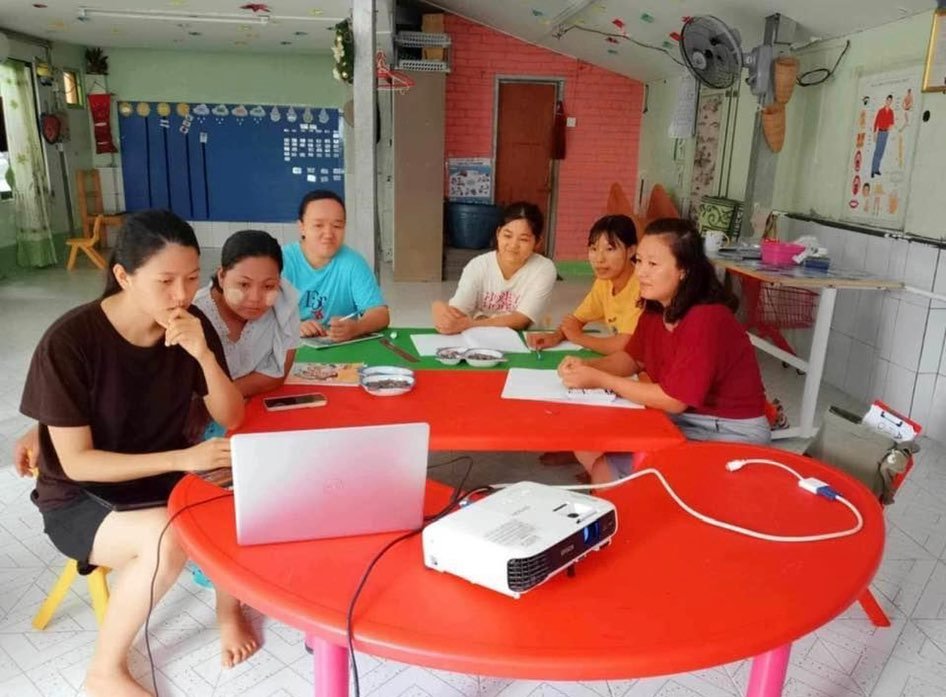
Asian Children’s Mission sponsors a two week annual for our Christian school teachers and a week-long session for Sunday School teachers. The subject matter will inc...
Children are at high risk, as deteriorating economic conditions forced destitute parents to take them out of school to work in factories and teashops or to beg. Many wer...
A series of six children's centers near Yangon are planned. These are in reality, children's churches, and will be in operation on both Saturdays and Sundays. The fir...
No one knows how many orphans live in Burma. Some put the number at 70,000 – others place it higher. And besides the orphans, there are thousands more “social orp...
The Burmese government continues to allocate minimal resources to public education – only about 1.1% of gross domestic product (GDP). On average public school teachers'...
Lack of access to safe drinking water results in much preventable disease and death in Burma. Asian Children’s Mission has partnered with the International Disaster a...
Rice Mills Burma's delta is the rice bowl of the country. When Cyclone Nargis devastated the region on May 2-3, 2008, most of the rice mills were destroyed -- and th...

An orphan who survived the cyclone drew this picture of what he saw – bamboo houses being tossed around in the cyclone – then floating away in the storm surges.
Cyclone Nargis hit Burma’s southern delta region on May 2 and 3, 2008.
More than 140,000 people died in the cyclone.
For weeks, many bodies of both people and animals lay where the storm left them.
In many areas, more than 90% of the houses and other structures were destroyed.
Travel in Burma is always an adventure. Trains can derail. Airlines within the country do not always adhere to internationally recognized safety standards.
Even travel by bus on the road is uncertain due to the poor road condition and frequent breakdowns. To make a difficult situation even worse, it is not unusual to be sold diesel fuel mixed with water, causing further breakdowns and delays. A 100 mile trip can easily take 12 hours or longer.
In Burma’s delta region, travel to many villages is by boat. During the monsoon season, storms can come up quickly, capsizing boats like this one.
ACM currently has 30 teachers teaching in 13 villages in southern Burma. We are hoping to send 100 teachers to educate and protect children in poor and remote villages.
Teachers not only bring education to impoverished and destroyed villages, but also protect innocent children from abduction and child slavery. More...